In this article
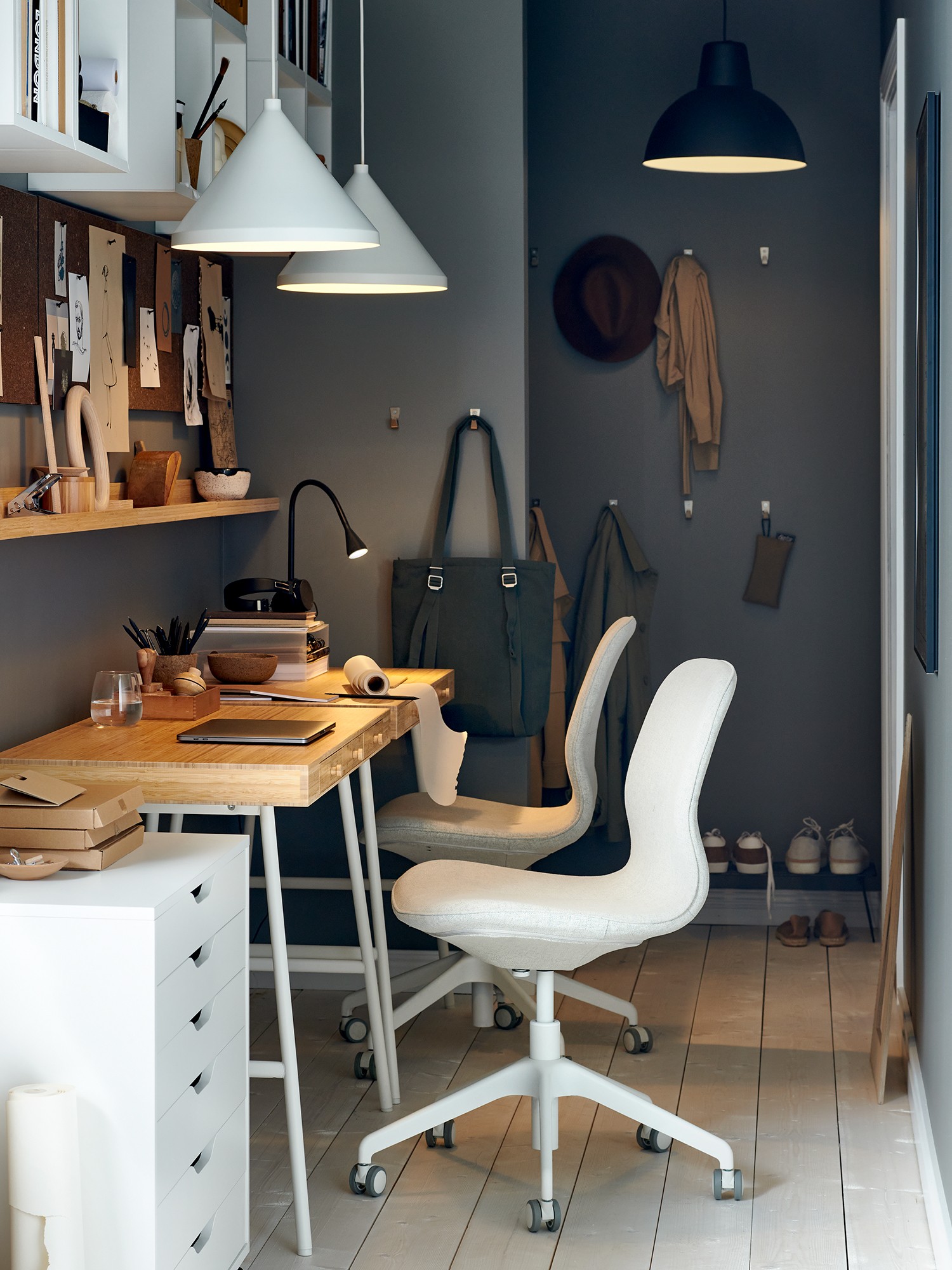
A home office does not need to dominate a room to support serious work. It needs the correct depth, dependable light and a clear way to close at the end of the day.
Start with the circulation test
The overlooked edge of a hallway, landing or space beneath a staircase can become a useful work zone, but only if it still works as a passage. Before choosing furniture, mark the proposed desk depth on the floor and walk past it with the chair pulled out. Open every nearby door and cupboard too. A workspace is not compact if it creates a daily obstacle.
Choose depth before width
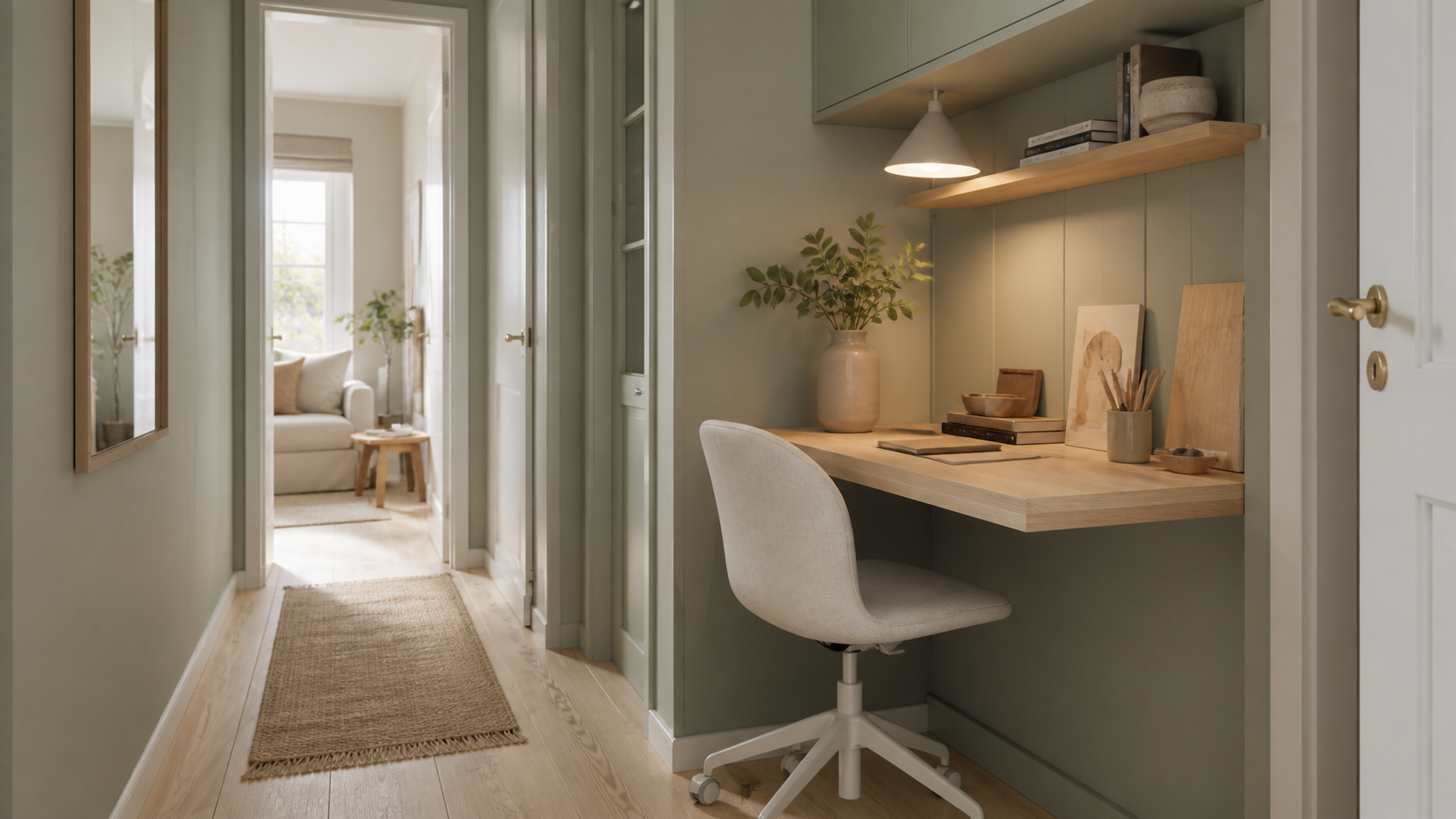
For laptop work, 50–60 cm of usable depth matters more than an extra-wide surface. It keeps the screen at a comfortable distance and leaves room for forearms without pushing the desk deep into the room.
A narrower desk can still feel substantial when its surface is kept clear. Look for one slim drawer for stationery and cables rather than a deep pedestal that reduces legroom. If the desk sits in a shared route, softly rounded corners are also worth considering.
Let the chair disappear
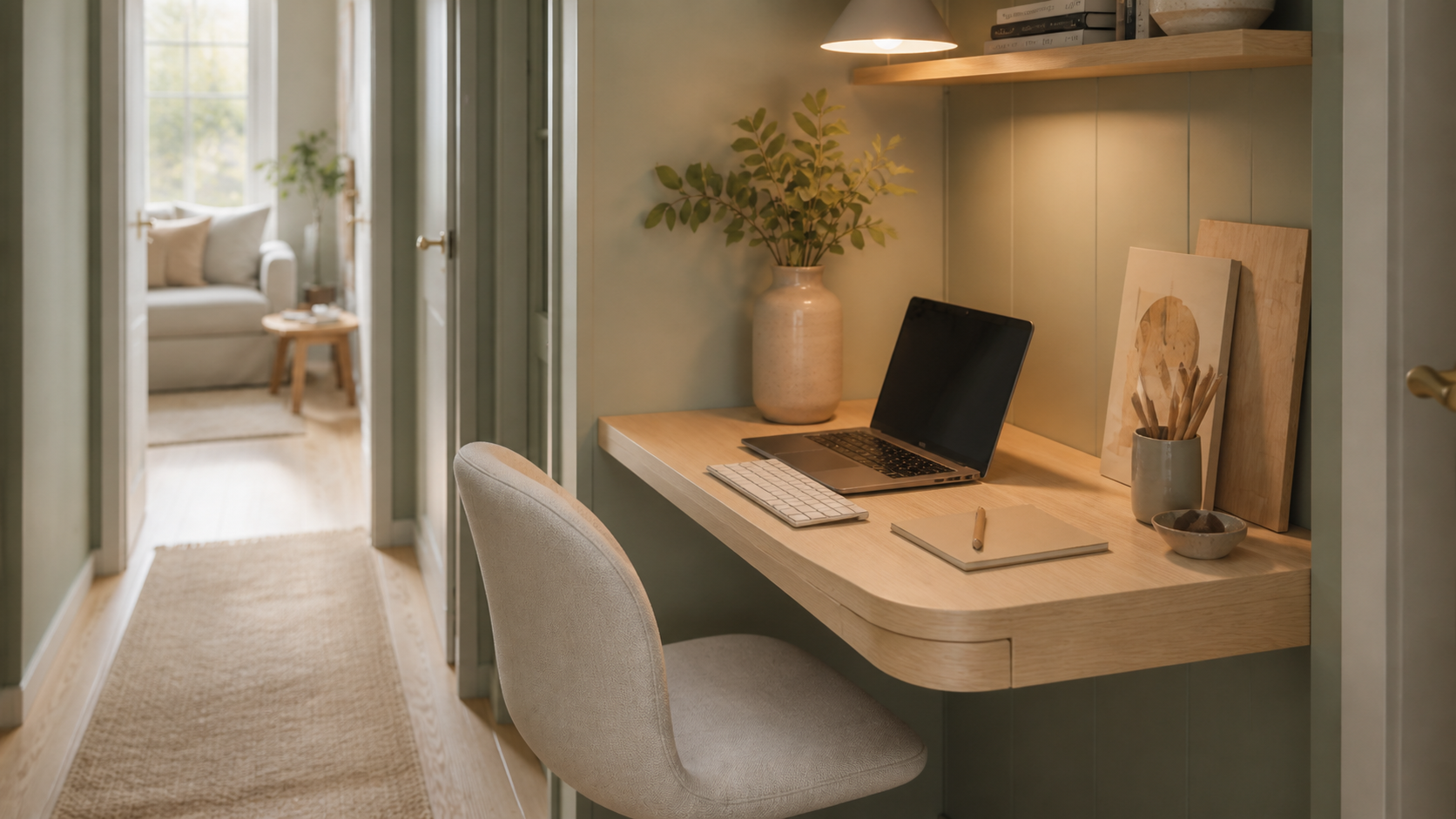
The chair determines how much space the workspace occupies when nobody is using it. Check the distance between the desk legs and any drawer underneath before buying: the chair should tuck fully beneath the top rather than remain in the passage. A compact swivel base can work well, but only when its wheels and arms fit inside the desk footprint.
Move storage up the wall
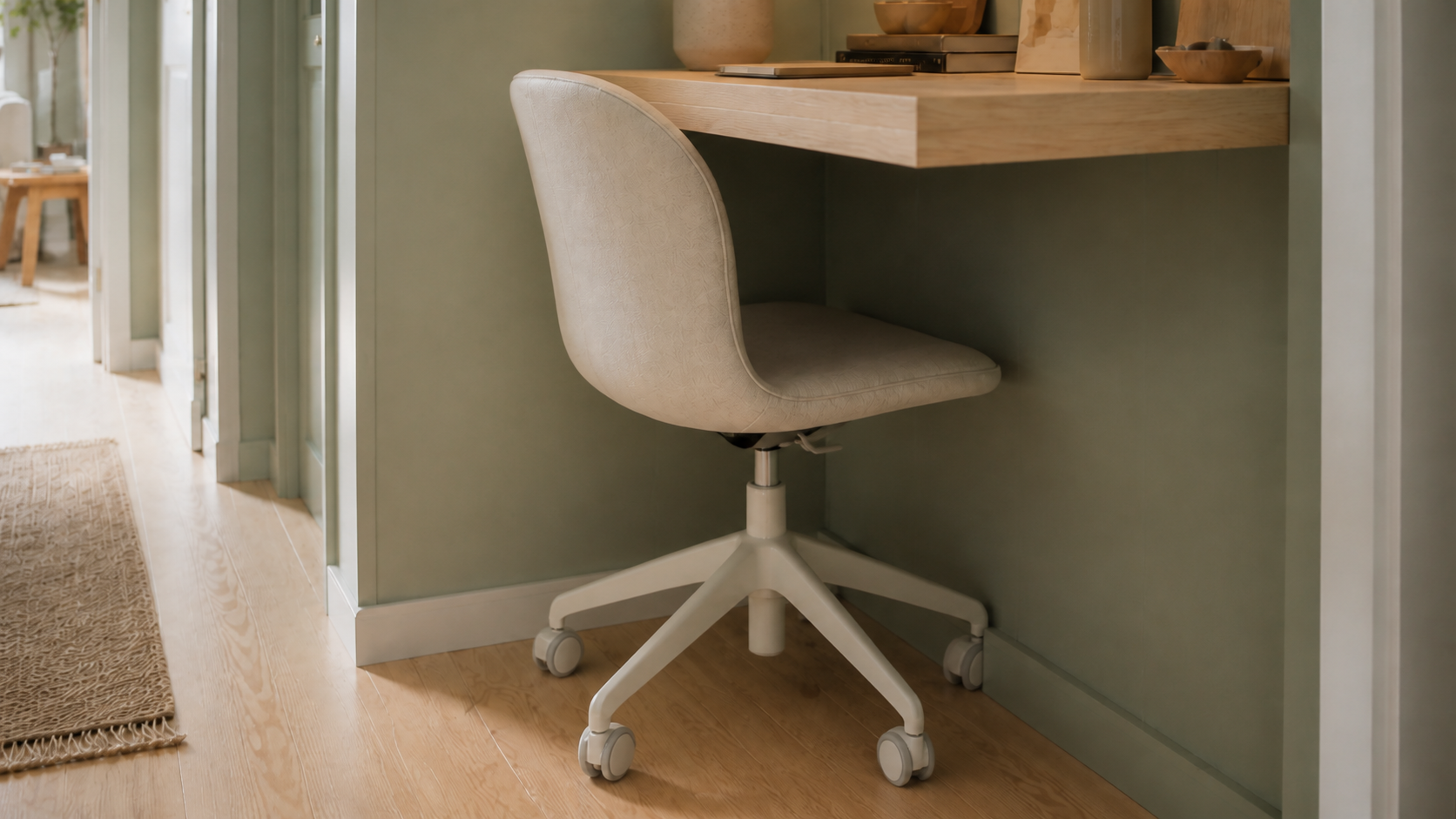
Closed cupboards above the desk can hold chargers, paper and infrequently used supplies without taking floor space. Keep everyday tools on a single shallow ledge, and avoid filling the full wall with open shelves. A small amount of visible storage supports work; too much makes a hallway feel like an office corridor.
A useful approach is to make every component work together: shallow furniture below, organised information at eye level and storage above. The principle matters more than matching any particular product.
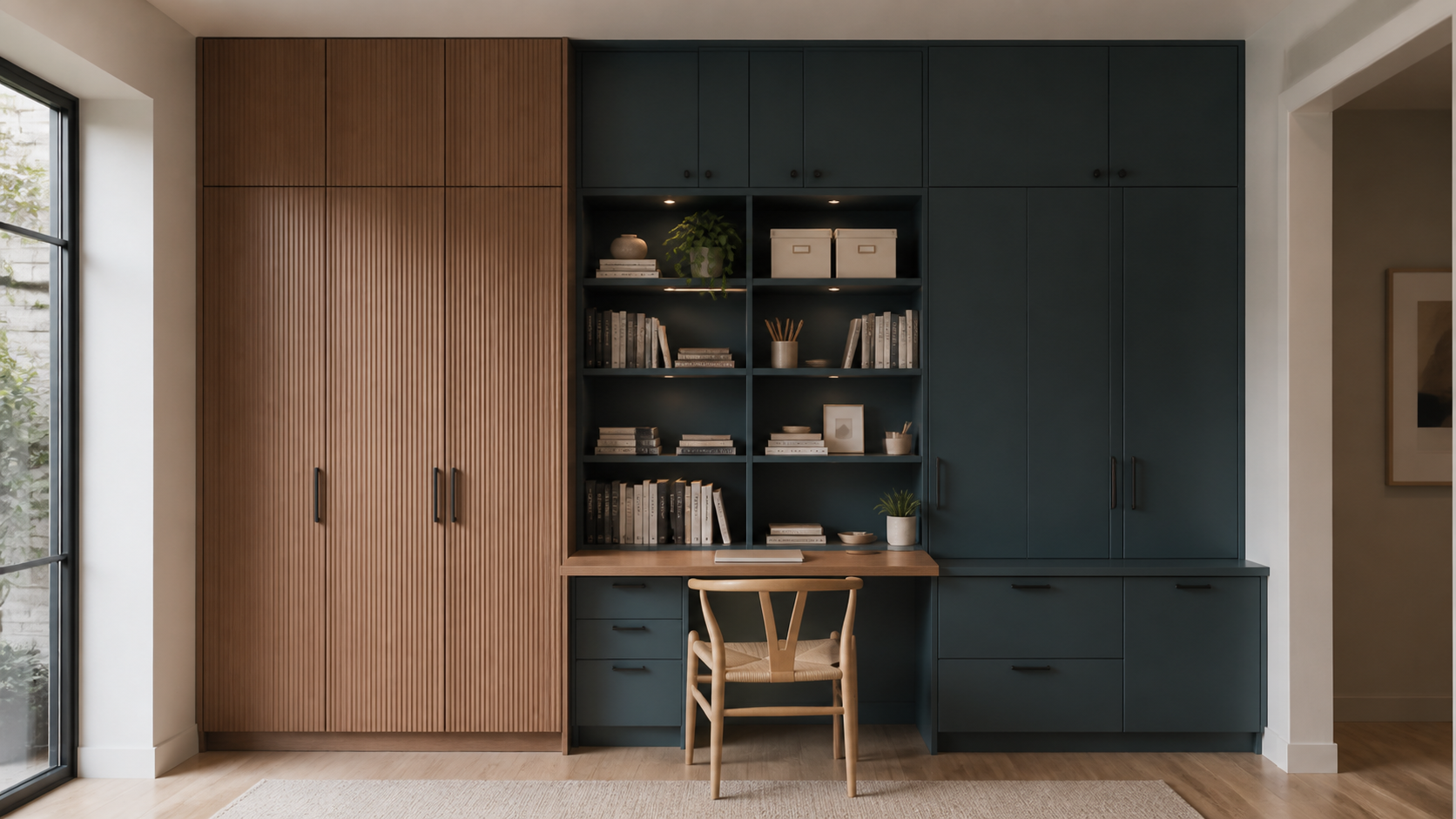
Light the work, not the whole passage
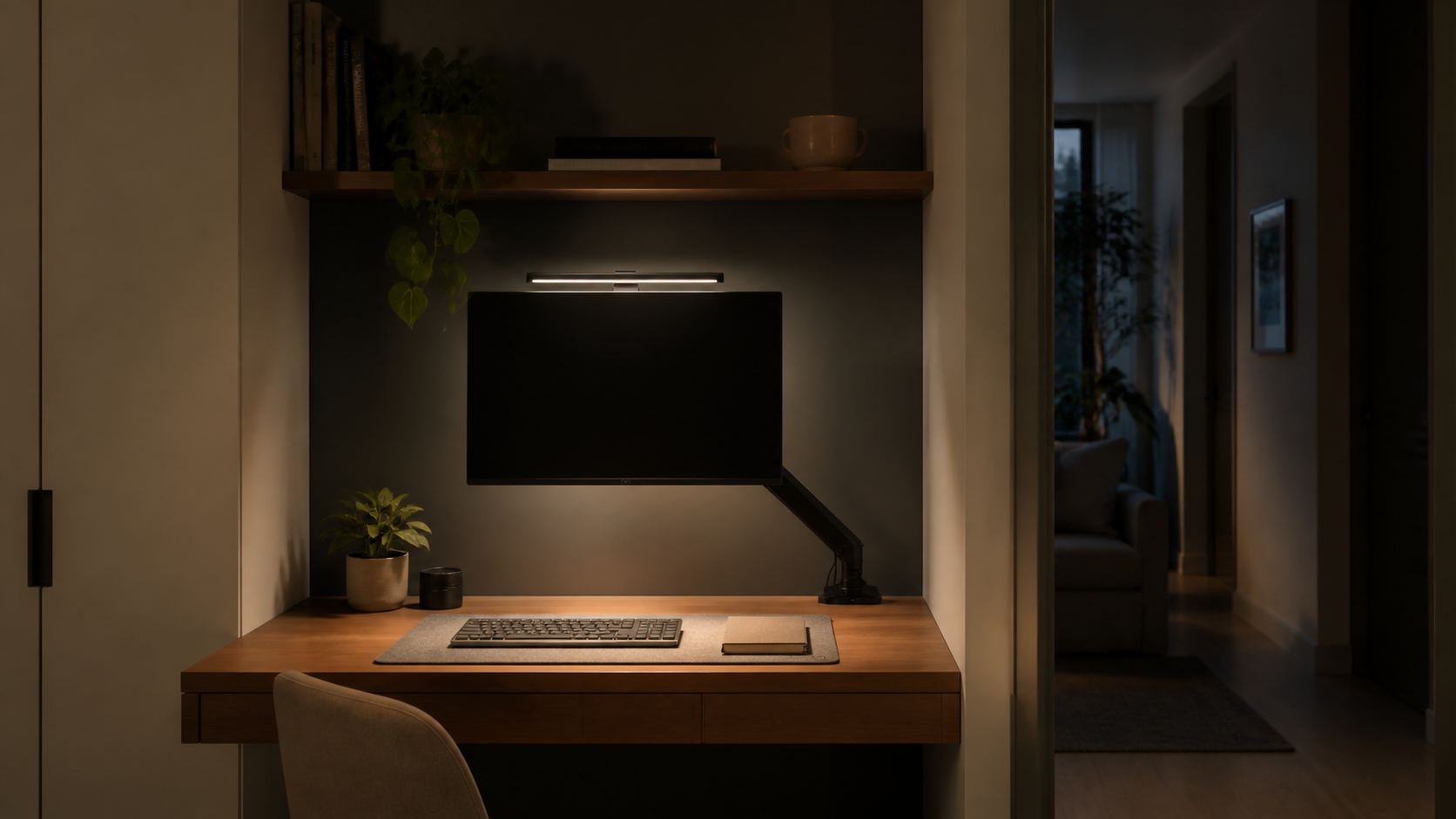
When the desktop is shallow, a large table lamp consumes valuable working area. A pendant or wall-mounted task light keeps the surface free and can distribute light more evenly. Position it so the shade is outside your direct line of sight and check for reflections on the screen before fixing it permanently.
Give loose information one boundary
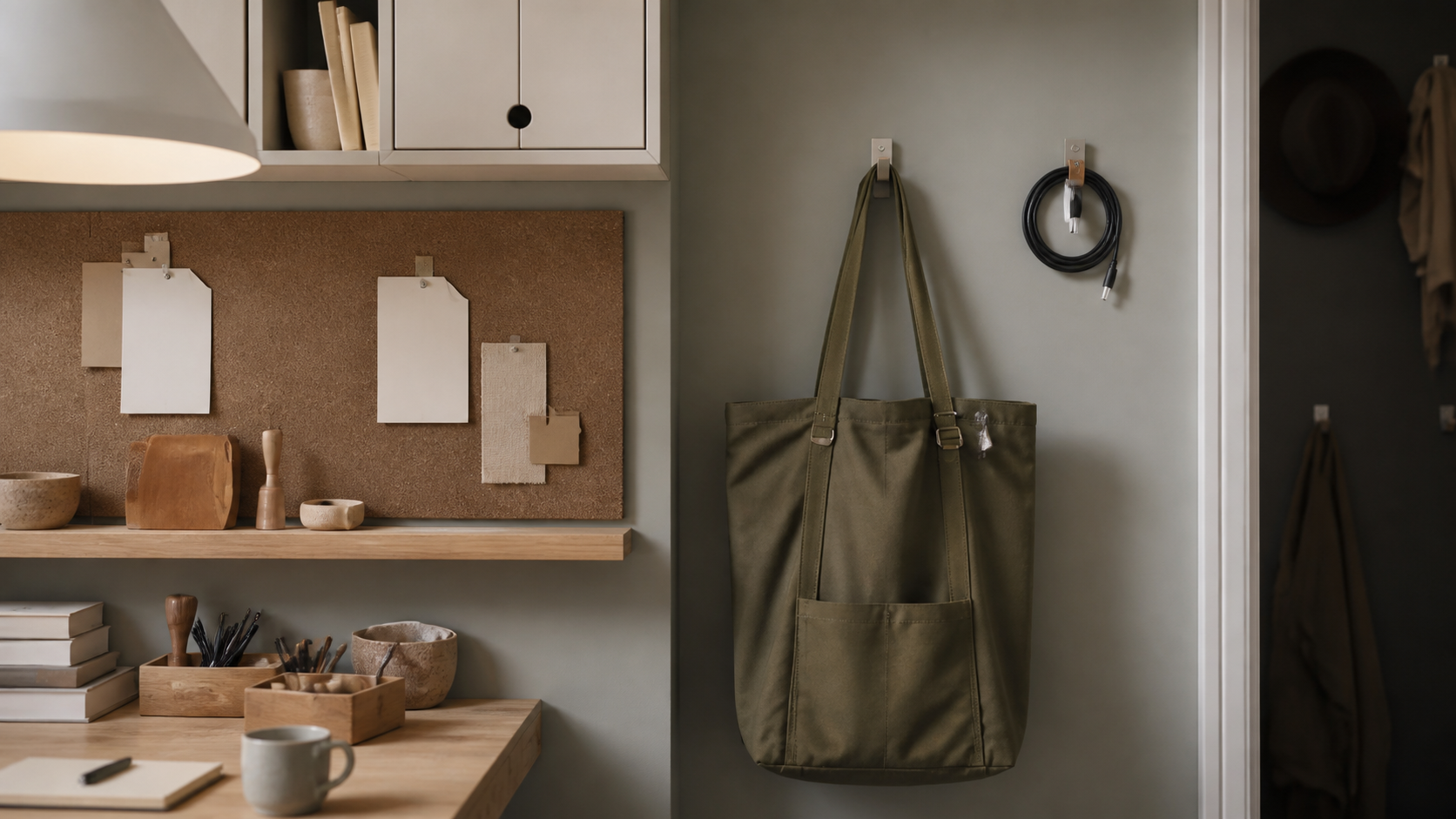
A compact memo board and a narrow ledge keep notes, references and small tools off the desk. Limit the display to the current project and clear it during the weekly reset. That boundary prevents the work zone from gradually spreading along the wall.
Keep a ready-to-go work bag
If several people use the desk—or if the hall needs to return to a calmer state—a dedicated tote can hold the laptop stand, notebook, headphones and charger. Hang it beside the desk and coil the cable on its own hook. Everything needed for the next session stays together without remaining on display.
Build an end-of-day ritual into the setup
A single drawer, one cable route and a task light on a dedicated switch can turn packing up into a thirty-second action. Put paper in the drawer, return portable equipment to the tote, coil the charger and push the chair under the desk. In a shared room, that visible transition matters as much as ergonomics.
A quick planning checklist
- Can someone pass comfortably while the chair is occupied?
- Do all nearby doors and cupboards open fully?
- Does the chair tuck completely under the desk?
- Is the screen free from glare at the time of day you usually work?
- Can the desktop be cleared in under a minute?
- Are cables secured away from the walking route?
A successful small workspace is not the one with the most storage or equipment. It is the one that supports focused work, respects the surrounding room and becomes visually quiet when the workday ends.